As a product analyst who has spent nine years dissecting onboarding flows, I have a ritual: I check an app’s load time on 4G before I ever touch its features. If a casino app takes more than two seconds to pull my data from the server, I’m gone. In the world of entertainment and gaming, mobile users operate under extreme volatility. They jump from high-speed home Wi-Fi on a tablet to patchy mobile data on a smartphone while commuting.
When we talk about cross-device compatibility, we aren't talking about "next-gen innovation." We are talking about basic reliability. If a player switches from their living room iPad to their smartphone in a cab, they expect a seamless transition. When that fails, the product fails. Companies like MrQ (mrq.com) have navigated this by prioritizing clean, functional interfaces that focus on the user’s current state rather than bloated feature sets.
If your platform creates friction during this hand-off, you’re losing players. Here is what needs to move across devices, and how to manage the infrastructure to ensure it actually works.
Mobile-First Design: Beyond Simple Scaling
Too many platforms treat mobile-first as a "responsive CSS" problem. It is not. It is an interaction model problem. When you move from a tablet to a smartphone, the screen real estate shrinks, and the touch target proximity changes.
A true mobile-first casino interface accounts for the following:
- Touch Fitts' Law: Buttons must be large enough to hit with a thumb, even on smaller smartphone screens. State Awareness: If a player is in the middle of a session, the mobile view must prioritize the "resume" state, not the marketing landing page. Contextual Modals: On a tablet, you might show a full-screen overlay. On a smartphone, that same overlay might block essential navigation. You need custom UI components for each form factor.
Industry observers at TechCrunch (techcrunch.com) have frequently highlighted that the gap between "desktop-web" and "app-native" is closing, but the real winner is the platform that treats the user’s *session* as the primary entity, not the specific hardware.
The Essential Sync Checklist: What Must Follow the User
If you aren’t syncing these three buckets, you aren’t offering cross-device compatibility; you are offering a fragmented experience. Keep these in your backend state management:
1. Account Progress
This is the most sensitive data point. Whether it’s a loyalty tier, an active wager, or a specific bonus round, the "state" of the game must be preserved. If a user loses their place because they switched from their tablet to their smartphone, they lose confidence in the security of their digital wallet casino transaction.
2. Wallet Balance
This sounds obvious, but it is often the most common point of failure. Latency in database calls can lead to "phantom balances." Your cloud infrastructure must use immediate consistency models here. When a user updates their wallet balance on one device, it should reflect across all logged-in sessions via a real-time WebSocket connection. If I win on a smartphone, I want to see that balance represented immediately on my tablet dashboard.
3. Settings Preferences
Do not force a user to re-configure their sound settings, language, or notification toggles every time they switch devices. These settings preferences are the "comfort layer" of your UX. Ignoring them makes the app feel like a stranger every time it opens.

Cloud Infrastructure and the Low Latency Requirement
To support this, you need a robust cloud backend. I’ve seen developers rely on periodic polling—where the client asks the server "What’s my balance?" every 10 seconds. This is the wrong approach. It leads to outdated information and high bandwidth consumption on mobile data.
Instead, utilize a pub/sub architecture. When a state change occurs, the server should broadcast an update to all active sessions associated with that user ID. If the infrastructure isn't built to handle concurrent session updates, you will inevitably run into state collisions where the user thinks they have more (or less) than they actually do.
Latency is the silent killer of retention. If your server-side rendering is slow, or your API calls are chained together in a waterfall, the mobile experience will stutter. Keep your API responses under 100ms. If you can’t, your architectural debt is showing.
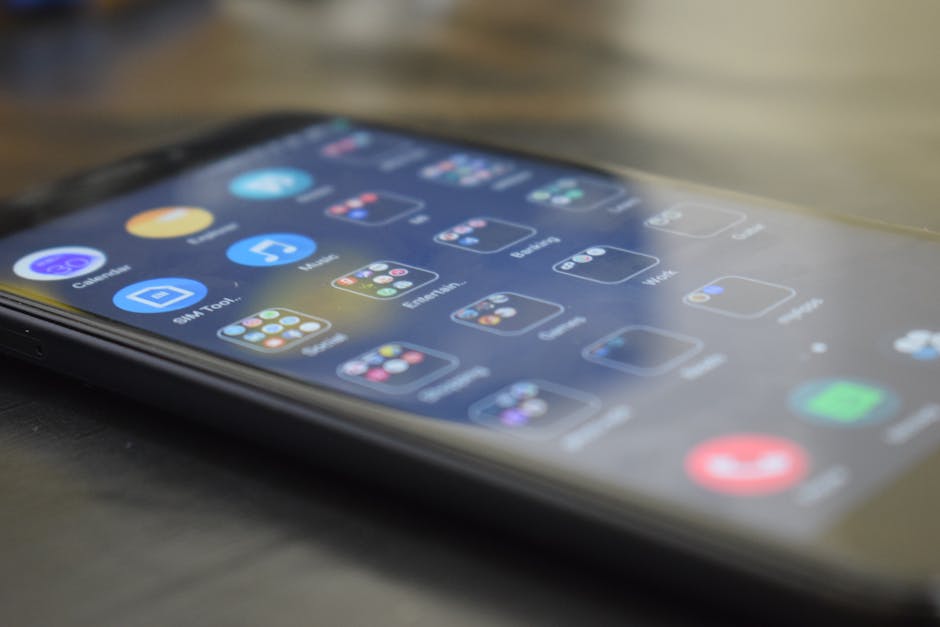
Real-Time Live Dealer Engagement
Live casino features are the ultimate test of streaming technology. If a player is participating in a live dealer game, the video stream must be synced perfectly with the betting interface.
When streaming to a smartphone, the challenge isn't just bandwidth—it's the hand-off between Wi-Fi and 5G. A stable player experience requires:
- Adaptive Bitrate Streaming (ABR): The stream must automatically scale down resolution if the user’s mobile data dips, without pausing the video or the betting state. Live Chat Integration: This should be a lightweight overlay. Do not bake it into the main video layer. If the chat needs to refresh or sync, it should happen asynchronously so it doesn't interrupt the dealer feed. Buffer Management: Keep the latency between the dealer’s physical action and the video display under 500ms. If the delay is too long, the player feels disconnected from the game mechanics.
If you are forcing a user to refresh their entire page just to see a dealer or reconnect to a stream, you have failed the UX audit. The UI should detect a connection flicker and gracefully attempt a silent reconnect in the background without clearing the user’s betting state.
The Common Mistake: Overcomplicating the Handover
I frequently see developers try to "save" the user's progress by asking for confirmation before syncing. Don't do this. If a user logs into their phone, they have implicitly authorized the session. Do not show them a prompt that says, "You are logged in on another device. Would you like to sync?" Just sync the data.
The best products are invisible. If I’m on my tablet and I move to my phone, the transition should be so smooth that I forget I’m using a different piece of hardware. When a product analyst like myself has to write an error report because your app couldn't handle a simple device switch, it’s a clear sign of poor backend design.
Final Thoughts on Trust and UX
Players value their money and their time. When your app fails to sync their account progress or wallet balance, you aren't just losing a session; you are losing trust. Every time a user has to manually refresh, verify, or re-input a preference, they are reconsidering if your platform is worth their time.
To win in the modern mobile casino space, focus on these three pillars:
Consistency: Your state management must be atomic and real-time. Performance: If it takes longer than two seconds to load on mobile data, fix your backend. Clarity: Stop burying information. If a user needs to see their balance or their progress, put it where their thumb rests naturally.The era of treating desktop-based casinos as the primary and mobile as an "add-on" is long over. Build for the smartphone first, use cloud-native tools to bridge the device gap, and for heaven's sake, stop using buzzwords. A stable, responsive app speaks louder Hop over to this website than any marketing copy ever could.